Demystifying Deep Learning: Fine-Tuning Techniques for Better AI Models


Understanding Deep Learning and Its Importance
Deep learning, a subset of machine learning, has revolutionized the way we interact with technology. From voice assistants to personalized recommendations, its applications are vast and transformative. By mimicking the human brain's neural networks, deep learning models can process and learn from large datasets, offering unprecedented accuracy and insights.
However, building effective AI models isn't just about creating complex networks. Fine-tuning these models is crucial for achieving optimal performance. This process involves adjusting the model's parameters to enhance its accuracy and efficiency.
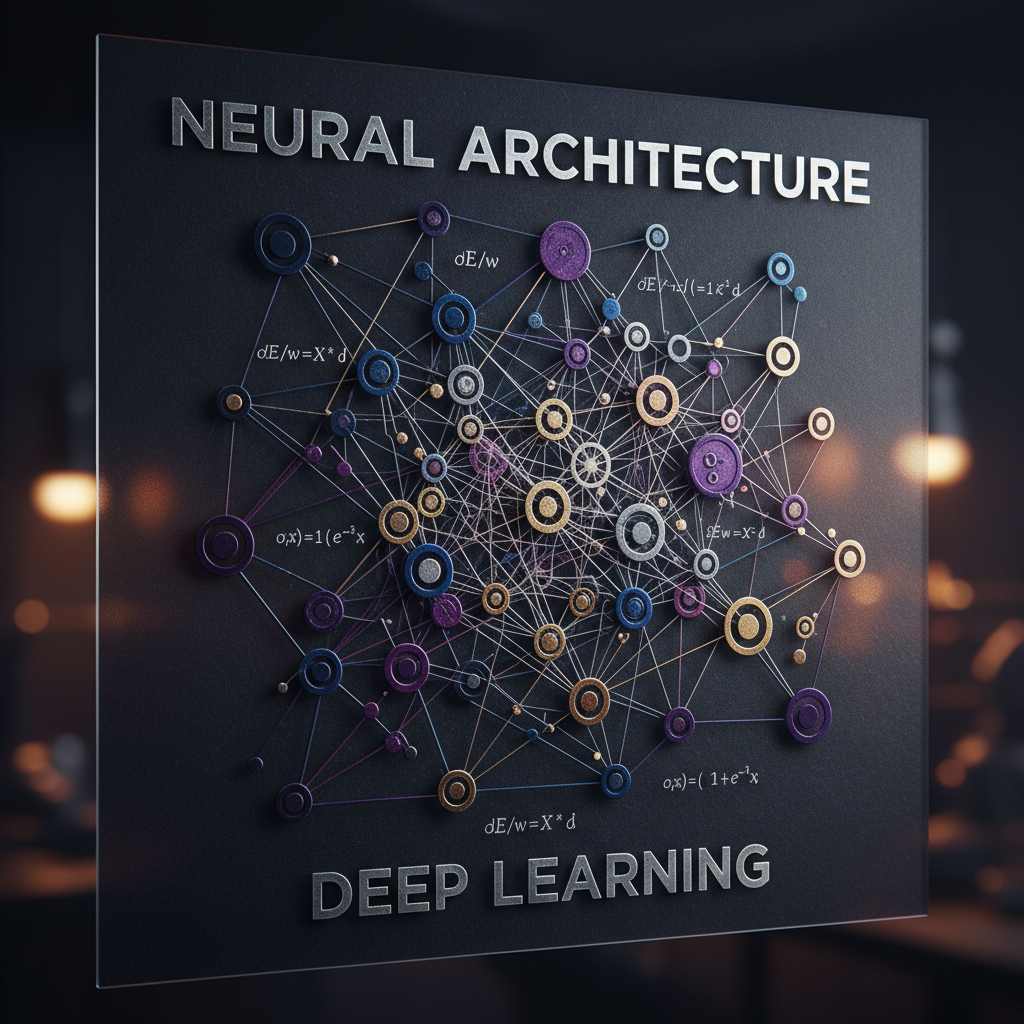
Fine-Tuning Techniques: An Overview
Fine-tuning involves refining a pre-trained model to better suit a specific task. This is particularly useful when resources are limited, as it leverages existing models rather than starting from scratch. By adjusting the layers and parameters, developers can create a customized model that performs exceptionally well in its desired application.
Transfer Learning
Transfer learning is a popular technique in deep learning where a model developed for a particular task is reused as the starting point for a model on a second task. This method saves time and computational resources, making it a favorite among data scientists. By employing transfer learning, you can use a well-established model as a foundation and fine-tune it to meet your specific needs.

Regularization Techniques
Regularization is crucial to prevent overfitting, a common issue where a model performs well on training data but poorly on unseen data. Techniques such as dropout, L1/L2 regularization, and data augmentation help in maintaining the model's generalization capabilities. These methods ensure that the model remains robust and effective across various datasets.
Optimizing Hyperparameters
Hyperparameter tuning is another critical aspect of fine-tuning deep learning models. Hyperparameters are the variables that govern the training process, and finding the right combination can significantly boost model performance. Techniques like grid search, random search, and Bayesian optimization are commonly used to identify the optimal hyperparameter settings.

Batch Normalization
Batch normalization is a technique used to improve the stability and performance of neural networks. By normalizing the inputs of each layer, batch normalization accelerates training and allows for higher learning rates. This leads to faster convergence and more accurate models, making it an essential step in the fine-tuning process.
Practical Applications and Benefits
The benefits of fine-tuning are immense. By tailoring models to specific tasks, businesses can achieve greater accuracy and efficiency in their AI applications. This precision is vital in fields such as healthcare, finance, and autonomous systems, where decision-making accuracy can have significant consequences.
Moreover, fine-tuning enables the scalability of AI solutions. As models become more refined, they can be deployed across various domains, offering versatile solutions to complex problems. This adaptability ensures that AI continues to grow and evolve alongside technological advancements.