Exploring the Latest Trends in AI Fine-Tuning: Innovations and Best Practices


Understanding AI Fine-Tuning
AI fine-tuning is a crucial step in customizing pre-trained models to perform specific tasks with high accuracy. By adjusting the parameters of a model that has already been trained on a broad dataset, businesses can leverage AI technology to meet their unique needs. This process not only improves efficiency but also significantly reduces the time and resources required to train new models from scratch.
In recent years, several innovations in fine-tuning have emerged, making it more accessible and effective. These advancements are helping organizations across various industries implement AI solutions that are tailored to their specific requirements.

Transfer Learning: A Game Changer
One of the most significant breakthroughs in AI fine-tuning is the concept of transfer learning. This technique involves taking a pre-trained model and fine-tuning it for a new, related task. The ability to transfer knowledge from one domain to another drastically reduces the amount of data and computation required.
Transfer learning is particularly beneficial in fields where labeled data is scarce. Models can be fine-tuned with a relatively small dataset, making this approach both cost-effective and efficient. This has opened up new possibilities for startups and smaller companies to harness AI technology without needing extensive resources.
Layer-Wise Fine-Tuning
Layer-wise fine-tuning is another innovative approach gaining traction. This method involves selectively fine-tuning certain layers of a model while keeping others frozen. By focusing on the layers most relevant to the new task, businesses can achieve optimal performance with minimal computational cost. Layer-wise fine-tuning is particularly useful in complex applications such as natural language processing and computer vision.
Best Practices for AI Fine-Tuning
To maximize the benefits of AI fine-tuning, it's essential to follow certain best practices. Firstly, starting with a well-chosen pre-trained model is crucial. Selecting a model that closely aligns with the target task can significantly enhance the fine-tuning process.
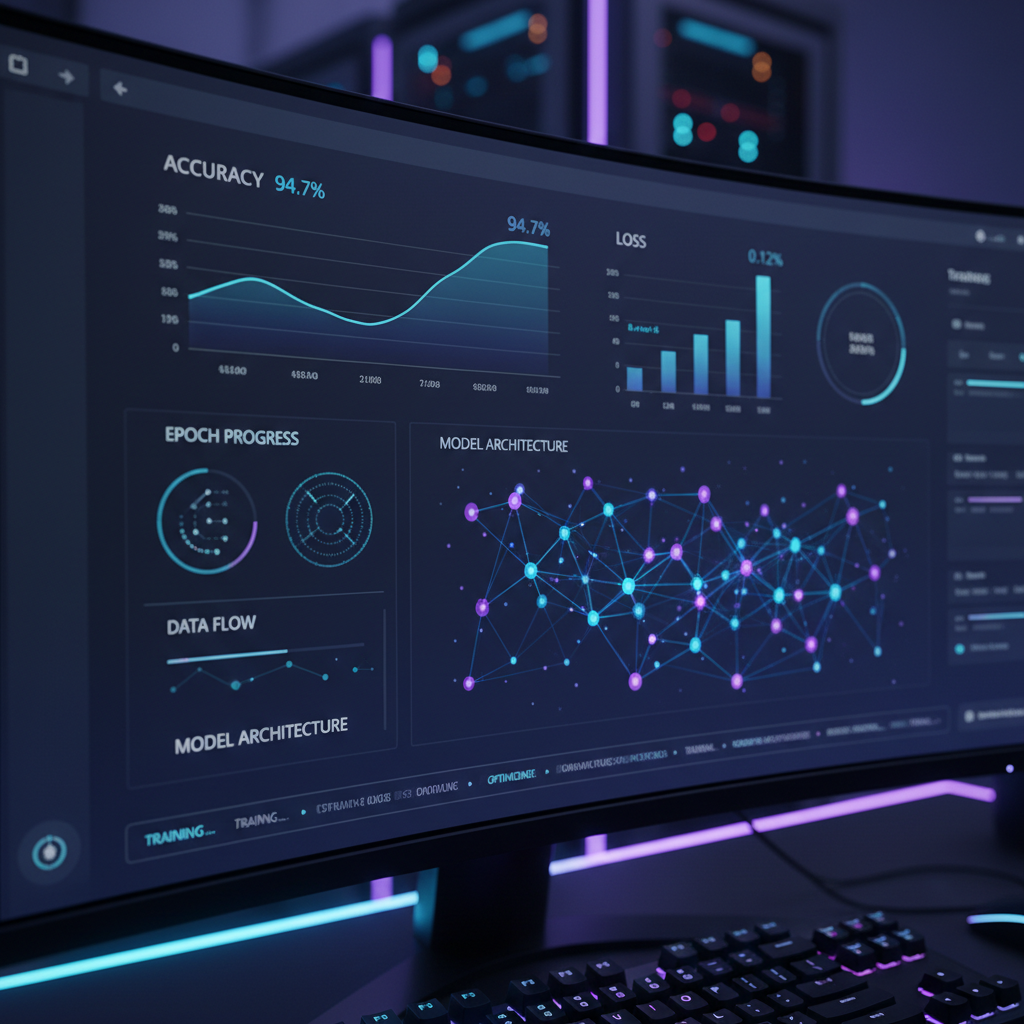
Another key practice is to monitor the model's performance closely during fine-tuning. Keeping an eye on metrics such as accuracy, precision, and recall helps in making informed adjustments. Additionally, employing techniques like early stopping can prevent overfitting, ensuring the model generalizes well to new data.
Hyperparameter Optimization
Hyperparameter optimization is a critical step in fine-tuning AI models. By experimenting with different learning rates, batch sizes, and other parameters, organizations can find the optimal settings that yield the best performance. Tools like grid search and Bayesian optimization are commonly used to streamline this process.

Real-World Applications
AI fine-tuning has found applications across a wide range of industries. In healthcare, fine-tuned models are being used to improve diagnostics and personalize treatment plans. In finance, they help with fraud detection and risk assessment. The retail industry utilizes them for personalized recommendations and inventory management.
As the technology continues to evolve, the potential applications of fine-tuned AI models are virtually limitless. Organizations that embrace these innovations are well-positioned to gain a competitive advantage and drive significant value.
The Future of AI Fine-Tuning
Looking ahead, the future of AI fine-tuning is bright. As models become more sophisticated and the fine-tuning process becomes more streamlined, the barriers to entry will continue to decrease. This democratization of AI technology will enable even more businesses to harness its potential.
Continuous research and development in this area promise to bring further innovations, making AI fine-tuning an indispensable tool for businesses striving to stay ahead in the digital age.